Nail Polish Rack
- 3.9
- Rating
- 10.00K
- Installs
- Free
- Price
 Analysis by App-foxy
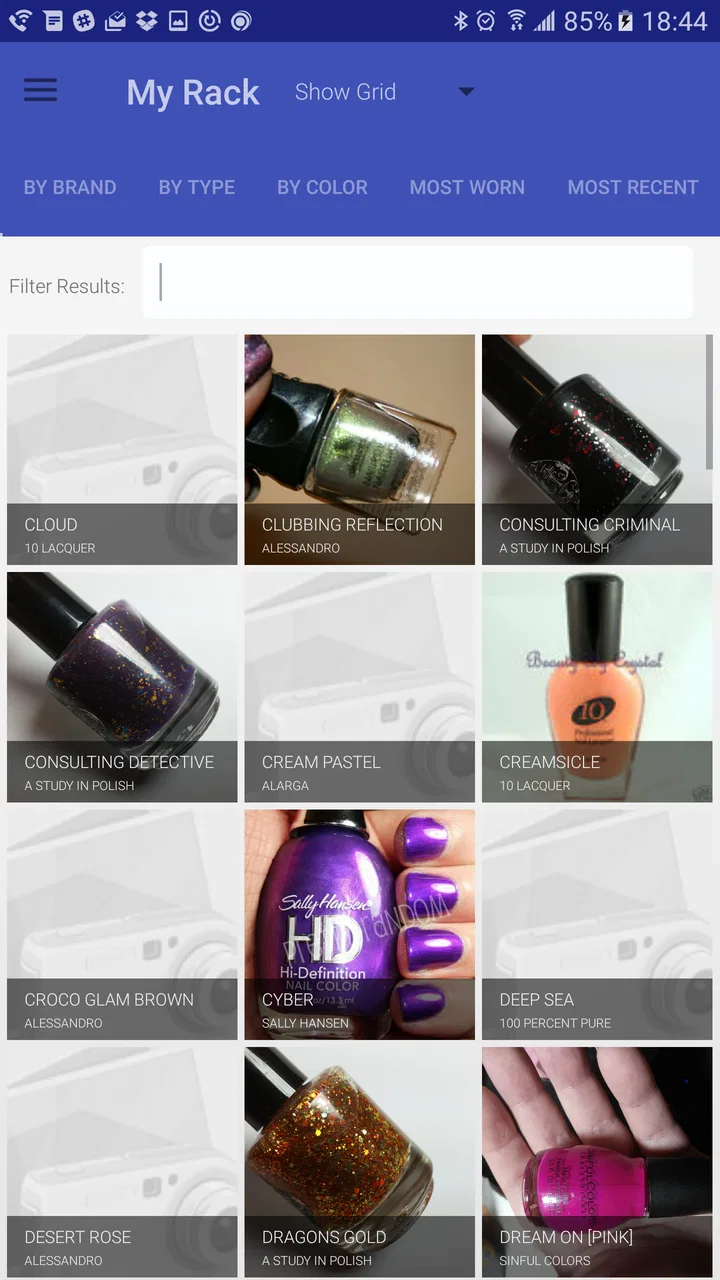
I like beauty apps that solve a small, annoying problem without trying to become my entire lifestyle. Nail Polish Rack fits that description. It is a cataloging app from MindBrite LLC, designed for people who have accumulated enough bottles to forget what they own, where a particular shade is stored, or whether a new purchase is actually different from something already at home. In my experience, its appeal is less about discovering polish and more about turning a scattered collection into something I can check before shopping or planning a manicure.
The app is free to download, carries an Everyone age rating, and runs on Android devices using version 6.0 or later. It has been available since March 20, 2013, and the current version is 3.2.2238. Those details matter because this is a long-running, focused utility rather than a new social beauty platform. It has attracted over ten thousand installs and holds a 3.9 average from more than six hundred ratings, which suggests a useful but fairly specific tool with a mixed range of experiences.
What it is like to build a personal polish catalog
The basic idea is easy to understand: I create a record of the nail polishes I own, then use that personal catalog instead of relying on memory. That sounds simple, but it addresses a real issue for anyone who keeps bottles in drawers, boxes, makeup organizers, or several rooms. A collection can become difficult to browse long before it becomes enormous, especially when similar colors are bought from different brands or finishes are hard to distinguish under store lighting.
You May Also Like

 Pandora - Music & Podcasts
Pandora’s Music Is Easy to Start, but Harder to Recover
Pandora’s strength is its low-effort path from a seed to a station. Its weak spot is how much confidence it asks you to place in connection, setup, and quiet recovery.

 8 Ball Pool
 Is Built on Rivalries, Rematches, and Routine
A close look at the rivalries, rematches, shared routines, and unanswered safety questions that turn a quick pool match into a persistent mobile community.

 Samsung Music
’s Quiet Strength Is Playing What You Already Own
Its reach comes less from spectacle than from dependable access to a personal library. That simplicity is both the app’s strongest retention engine and its ceiling.

 AccuWeather: Weather Radar
AccuWeather Review: A Quick, Clear Forecast for Everyday Decisions
For everyday plans, the best forecast is the one you can understand quickly. AccuWeather makes rain timing, radar, and local conditions easy to act on, with a few trade-offs.

 Hill Climb Racing
Why Hill Climb Racing Still Turns Crashes Into One More Run
A tiny car, a bumpy hill and one more upgrade: Hill Climb Racing keeps resurfacing because its simple chaos makes every near-miss feel personal.

 AliExpress - Shopping App
AliExpress Makes Global Shopping Feel Personal, but Shoppers Bear the Risk
AliExpress turns a global marketplace into a pocket-sized discovery engine. Its reach is useful, its shopping loop compelling, and its trade-offs easy to miss.
More From Our News Desk
View All News


I would approach the first setup as a sorting project rather than a quick five-minute task. The most useful result depends on entering consistent information. If I record one bottle by its full shade name, another by a nickname, and a third only as “pink glitter,” later searches become less reliable. A practical workflow is to work shelf by shelf, keep the bottles physically nearby, and use the same naming habits throughout. That is one of the less obvious trade-offs: the app can organize a collection, but it cannot compensate for rushed or incomplete cataloging.
For a small collection, I can see the value immediately. I might be getting ready for work and want a muted cream, or preparing for a weekend and looking for a dark finish. Instead of opening several drawers, I can consult the catalog first and narrow down what to pull out. The benefit grows when I regularly buy polish, because the app gives me a place to check before spending money on a color that only looks new in the bottle.
This is not the same experience as browsing a beauty retailer. A shopping app is built around products I might buy, while Nail Polish Rack is centered on products I already possess. That difference makes it more useful after a shopping trip than during casual product discovery. If my main goal is reading reviews, comparing current prices, or finding new releases, a retailer or beauty community will usually be a better fit. If my problem is remembering my own collection, this narrower approach makes more sense.
Why consistent records matter more than a large collection
A useful catalog should help me answer practical questions quickly: Do I already have this shade? Which bottles are suitable for a particular look? Is a color represented by several near-duplicates? To get there, I would record details in a repeatable order and avoid relying only on visual memory. Bottle colors can be misleading, and two polishes that look similar in a drawer may behave very differently on the nail.
One smart habit is to separate color from finish when organizing my thoughts. “Blue” is usually too broad to be useful, while a description such as a pale blue shimmer or a deep blue cream gives me a better reminder of what I own. Another is to treat seasonal planning as a cataloging exercise: before a holiday, vacation, or event, I can inspect the collection and set aside likely options rather than buying under pressure. These are simple workflows, but they turn the app from a digital inventory into a decision aid.
I would also avoid entering every bottle in one exhausting session if the collection is large. A staged approach is easier to maintain. I can start with the colors I wear most often, then add special finishes, backups, and forgotten bottles later. This reduces the chance that the catalog becomes an abandoned project. The app’s real strength is not the act of typing in a bottle; it is having a dependable reference when the information has been entered carefully.
Trust, controls, and moments that deserve attention
Because this app deals with a personal beauty collection rather than public posts, trust is mostly about control and clarity. I want to know what I am adding, what I can edit, and whether the app remains useful without asking me to participate in a social network. The focused purpose is reassuring in one sense: the central activity is cataloging nail polish, not sharing a public identity or building a follower profile.
At the same time, I would still pay attention during installation and first use to the choices presented on my device. Permissions, sign-in prompts, backup options, and purchase screens are the moments when I decide how much information and money I am comfortable committing. I would not assume that an app is private simply because its subject is harmless. My rule is straightforward: read each visible prompt, allow only what makes sense for the task, and skip optional steps until I understand their purpose.
The app is free, but it includes in-app purchases ranging from ninety-nine cents to twenty-nine dollars and ninety-nine cents per item. That makes the purchase flow worth checking before I begin building a serious catalog. A free entry point is convenient, yet a user should know which functions are available without payment and which may be connected to purchases. I would treat any upgrade screen as a decision point rather than tapping through automatically, especially if I am setting up the app while distracted.
There is also a practical data-sensitive moment when I catalog products that reveal personal habits. My polish list could indirectly show how often I shop, which colors I prefer, or how much attention I give to beauty routines. None of that is highly sensitive for every person, but it is still my information. I would avoid entering unrelated personal notes, names, addresses, appointment details, or anything that the catalog does not need. Keeping records narrowly focused is a useful privacy habit with any collection app.
How I would handle account and device choices
Before investing time in a large collection, I would test the app with a small group of bottles. I would create a few entries, edit one, remove or correct another if the interface allows it, and then close and reopen the app. This is not glamorous, but it answers an important question: does the catalog behave reliably enough for me to trust with more work? It also gives me a chance to notice whether account creation, synchronization, or purchase prompts appear in a way I am comfortable with.
If the app offers any account-related choice on my device, I would consider whether I actually need it. A person who uses one phone and only wants a local reference may prefer the simplest setup available. Someone who changes devices or wants continuity would need to examine the options shown in the app before assuming that a catalog will follow them automatically. I would not enter an email address merely to browse a tool unless the reason is clear and worthwhile.
The same cautious approach applies to deletion and reset controls. A catalog takes time to build, so I would look for understandable editing and removal actions before adding hundreds of bottles. If I make a mistake, I want to correct a record without rebuilding it. I would also keep my own backup habit for especially valuable information, such as maintaining a separate note of favorite shades or photographing organized shelves. That is not a replacement for the app; it is a sensible safeguard against depending on one place for everything.
These checks are particularly important because a 3.9 average from more than six hundred ratings is neither a warning to avoid the app nor proof that every workflow will be smooth. It tells me to approach it with realistic expectations. A focused utility can be genuinely helpful while still having interface quirks, limited flexibility, or setup friction that bothers some users more than others.
Where it fits into everyday beauty routines
The strongest everyday scenario is shopping. I am standing in a store, see a bottle that resembles one I bought months ago, and want to avoid a duplicate. Instead of trying to remember the shade from a vague mental image, I can check the catalog. This is especially useful for families of colors that blur together: dusty roses, warm neutrals, sheer pinks, and dark reds can look distinct under store lights but nearly identical once they reach my drawer.
A second use is planning rather than purchasing. Before a trip, I can review what I own and choose a small group of colors without unpacking every bottle. Before a manicure, I can look for a finish that suits the occasion and then inspect the physical bottles for condition. The app helps with selection, but it does not replace the final real-world check. Polish can thicken, separate, or look different on the nail than it does in a bottle, so I would still test an older or unfamiliar shade before relying on it for an event.
A third use is collection maintenance. After giving away a bottle, finishing one, or discovering that a shade has changed, I can update the record rather than letting the catalog drift away from reality. This is where many inventory systems fail: the initial setup is satisfying, but later changes are ignored. I would schedule a quick review whenever I reorganize my storage. A short maintenance habit is more valuable than a perfectly detailed catalog that becomes outdated.
People who buy polish infrequently may not need a dedicated app. A note, spreadsheet, or few photographs could be faster for a modest collection. Those alternatives also offer more freedom in how information is arranged. On the other hand, a spreadsheet may feel too technical for someone who wants a beauty-specific place to browse a personal stash. Nail Polish Rack sits between those options: more purposeful than a general note, but potentially less flexible than a spreadsheet.
Who should use it, and who should skip it
I would recommend trying it if you frequently forget what you own, shop for similar shades, or enjoy organizing beauty products. It is also a sensible choice for someone who wants a private-feeling personal reference rather than a feed of other people’s manicures. The free starting price lowers the risk of testing the workflow, provided I review any in-app purchase choices before committing.
I would be more cautious if I want advanced collection management, rich product research, or guaranteed multi-device continuity. In those cases, I would compare the app’s visible controls with a spreadsheet or a broader beauty organizer before entering the whole collection. A spreadsheet takes more effort to design, but it can handle custom fields, purchase dates, storage locations, and personal ratings in exactly the format I choose.
I would also skip it if cataloging itself sounds like a chore I will never maintain. No app can make an unrecorded collection searchable. The best match is someone who enjoys a little organization or has a clear recurring problem that the catalog solves. Without that motivation, taking photos of the drawer may be the more realistic option.
My cautious verdict after weighing the trade-offs
The main reason to use Nail Polish Rack is control over your own collection, not entertainment or shopping discovery. I find that distinction helpful. It gives the app a clear job and makes it easier to judge: if checking my stash before buying or choosing a manicure would save me time, the focused catalog is worthwhile. If I want a complete beauty ecosystem, I should look elsewhere.
The app’s age, current version 3.2.2238, and continued presence in the beauty category make it feel like a specialized tool rather than a passing novelty. Still, I would begin with a small test catalog, watch the permission and purchase prompts, and confirm that editing and reopening records work as expected on my device. That cautious start protects my time and lets me decide whether the interface suits the way I actually store polish.
My final recommendation is positive but selective. I would suggest it to a polish collector who wants a dedicated inventory and is willing to keep entries accurate. I would not present it as a replacement for shopping research, product reviews, or a fully customizable database. For the right user, its narrow purpose is exactly what makes it useful: it turns a confusing drawer into something I can consult before I buy, pack, or paint.
As a free beauty app from MindBrite LLC with an Everyone rating and optional purchases, it is easy to try without treating the first launch as a major commitment. I would keep my information limited to the collection, make deliberate choices whenever the app presents account or purchase controls, and judge it by one practical test: after cataloging a small group, can I find and manage those bottles more easily than before? If the answer is yes, this compact organizer has earned a place in my routine.
FAQs for Nail Polish Rack
01What is Nail Polish Rack, and what can I use it for?
Nail Polish Rack is a mobile app designed to help you organize, catalog, and manage your nail polish collection. You can typically record polish names, shades, brands, finishes, and other useful details, making it easier to remember what you own and find a specific color before shopping or planning a manicure. It is especially helpful for users with large or frequently growing collections.
02Is Nail Polish Rack suitable for beginners as well as experienced nail enthusiasts?
Yes. Nail Polish Rack can be useful for both beginners building their first collection and experienced users who already own many bottles. New users can start with a simple list of their favorite shades, while more advanced collectors may benefit from organizing polishes by brand, color family, finish, or availability. The app’s usefulness depends on how much information you choose to enter and maintain.
03Can I customize or organize my nail polish collection in different ways?
The main purpose of Nail Polish Rack is to make collection management more convenient, so organization is an important part of the experience. Depending on the version and available tools, you may be able to sort or categorize polishes using details such as brand, shade, finish, or personal notes. Before downloading, check the current app description to confirm which organization and customization options are included.
04Does Nail Polish Rack require an internet connection or an account?
Requirements can vary depending on the platform version and the features you use. Basic collection browsing may work offline if your information is stored locally, while backup, synchronization, sharing, or other connected features may require internet access. An account may also be requested for certain services. Review the permissions, privacy information, and store listing before entering personal collection data.
05Is Nail Polish Rack free to download, and are there any in-app purchases?
The download price and available payment options may differ between Android and iOS, as well as between app versions. Some features may be offered for free, while advanced organization tools, advertising removal, cloud storage, or additional customization could require an in-app purchase or subscription. Always check the official store listing for the latest pricing, supported devices, and purchase details before installing.
Pros
- Keeps nail polish bottles visible and easy to compare.
- Helps organize colors by shade
- brand
- or collection.
- Compact design fits well on most desks or beauty stations.
- Makes it easier to notice missing or nearly empty bottles.
- Can reduce clutter during manicures and nail art sessions.
Cons
- May not fit unusually large or oddly shaped bottles.
- Open storage leaves bottles exposed to dust and sunlight.
- A full rack can become heavy and difficult to move.
- Limited capacity may not suit large nail polish collections.
- Some designs may tip if bottles are placed unevenly.

Nail Polish Rack
Gallery